Mexico City
CHAPTER PREFACE:
A CHARACTER’S ACCOUNT OF MEXICO CITY
“In 1519, Hernán Cortez landed in Mexico City, formerly Tenochtitlán (the Aztec capital). Mexico attained independence in 1821, and The Mexican Revolution occurred from 1910-1920, resulting in land and labor reform as well as a new constitution.
Mexico’s land itself is interesting, with many different climates, ranging from tropical on the coasts to volcanoes and desert, and notably with the Yucatán being the place where the asteroid that killed the dinosaurs collided.
For these reasons and because of the ancient civilizations and pyramids (Teotihuacán), Mexico has a strong association with the cosmos. Mexico is also home to many cenotes, sinkholes formed by collapsed limestone.
Ancient civilizations include Olmecs, Maya, Zapotecs, Toltecs, and Aztecs. Nahuatl, the Aztec language is still spoken by 1.5+ million people, and there are many different dialects across rural/indigenous parts of Mexico.
Big parts of Mexican food culture include corn (which the Mayans believe people were made from), chocolate (made from cacao, which originated in Mexico), and tamales. The Day of the Dead is a huge Mexican tradition, as Mexicans honor their ancestors through this celebration (rooted in Aztec culture).
Mexican art is noted for its use of vibrant colors and animal themes.
Mexico City is so full of life, with its Lucha Libre fighters, mariachi bands, and food markets full of indigenous plants and mystique. Some of my favorite memories are sharing a coffee with a friend looking at the beautiful Bellas Artes, strolling through Parque México, and watching people drink tequila with scorpions.”
ON THE WALL:
(ACTUAL BOOK TEXT)
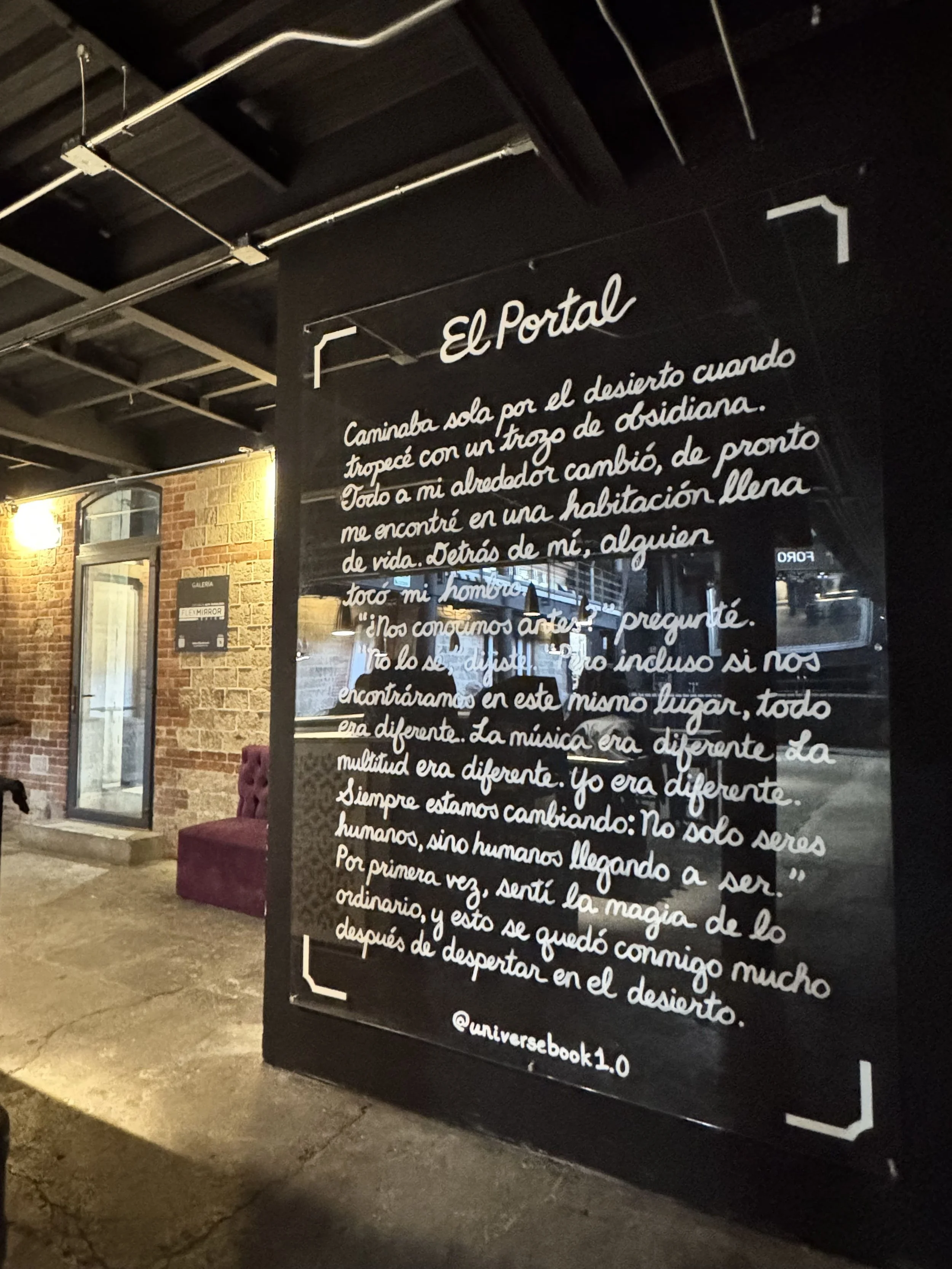
The Portal
I was walking alone in the desert when I stumbled upon a piece of obsidian. Everything around me changed, and suddenly I was in a room full of life.
Someone tapped me on the shoulder from behind.
“Did we meet before?” I asked.
“I don’t know,” you said. “But even if we did meet in this exact same spot, everything was different. The music was different. The crowd was different. I was different. We’re always changing: Not just human beings, but humans, becoming.”
For the first time, I felt the magic of the ordinary, and this stayed with me, long after I woke up in the desert.
El Portal
Caminaba sola por el desierto cuando tropecé con un trozo de obsidiana. Todo a mi alrededor cambió, de pronto me encontré en una habitación llena de vida.
Detrás de mí, alguien tocó mi hombro.
"¿Nos conocimos aquí antes?" pregunté.
"No lo sé," dijiste. "Pero incluso si nos encontráramos en este mismo lugar, todo era diferente antes. La música era diferente. La multitud era diferente. Yo era diferente. Siempre estamos cambiando: No solo seres humanos, sino humanos llegando a ser."
Por primera vez, sentí la magia de lo ordinario, y esto se quedó conmigo mucho después de despertar en el desierto.
BEHIND THE TEXT
This piece was created at a cultural center in San Ángel. In the story, the main character, in the desert, stumbles upon obsidian, which the Aztecs believed had magic powers. Shamans would use obsidian to communicate with deities or travel to other realms (see into the spiritual world and see the unseen, as well as travel through the underworld). Obsidian mirrors are commonly used for divination and seeing the future. The Aztec god Tezcatlipoca ("Smoking Mirror") was also associated with obsidian. Obsidian is used for cleansing and protection.
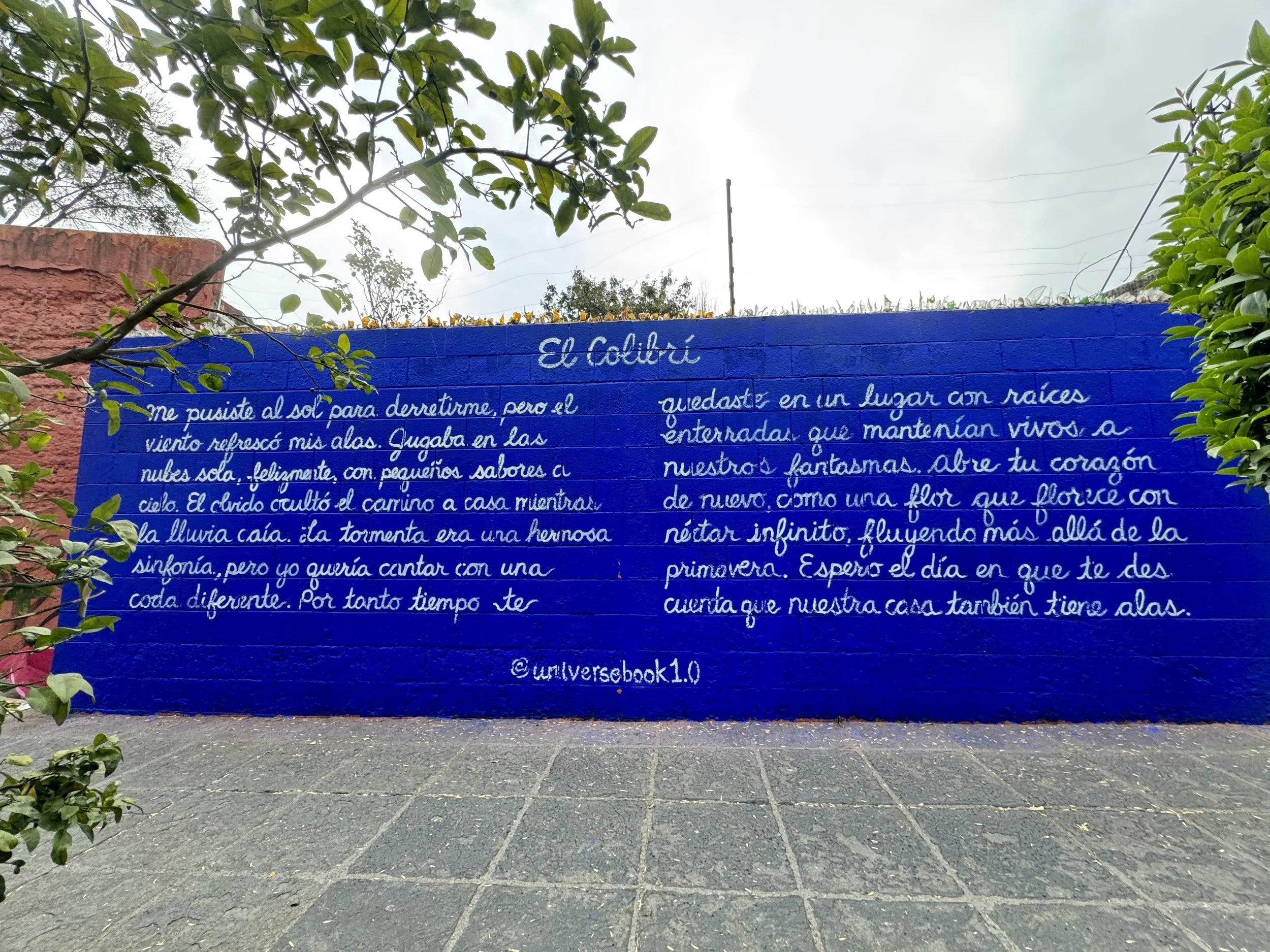
The Hummingbird
You put me in the sun to melt, but the wind cooled my wings. I played in the clouds alone, happily, with little tastes of heaven. Oblivion concealed the road home as rain fell. The storm was a beautiful symphony, but I wanted to sing with a different coda.
How long you stayed in a place with buried roots that kept our ghosts alive. Open your heart again, like a flower blooming with infinite nectar, flowing long after spring. I await the day that you realize our house also has wings.
El Colibrí
Me pusiste al sol para derretirme, pero el viento refrescó mis alas. Jugaba en las nubes sola, felizmente, con pequeños sabores del cielo. El olvido ocultó el camino a casa mientras caía la lluvia. La tormenta era una hermosa sinfonía, pero yo quería cantar con una coda diferente.
Por tanto tiempo te quedaste en un lugar con raíces enterradas que mantenían vivos a nuestros fantasmas. Abre tu corazón de nuevo, como una flor que florece con néctar infinito, fluyendo más allá de la primavera. Espero el día en que te des cuenta de que nuestra casa también tiene alas.
BEHIND THE TEXT
Painted in Frida Kahlo’s neighborhood of Coyoacán, the color of Frida Kahlo’s house. The piece itself is also a nod to Edward James’ house and surrealist gardens Las Pozas in Xilitla, San Luis Potosí, which bears the phrase: “Mi casa tiene alas.” The hummingbird is a significant symbol in the neighborhood of Coyoacan, as well as in Mexico folklore. On of Frida Kahlo’s notable paintings is “Self-Portrait with Thorn Necklace and Hummingbird.”